
QR15 Galería (Gallery)
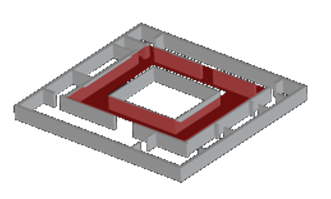 In this section of the castell, the galería porticada (portico gallery) is formed by pointed arches on columnas octogonales (octagonal columns) serves as the connection centre of all the rooms. It was originally designed as the access to the main nobility premises, the kitchen and the oratory with a view of the choir of the church: Iglesia de la Asunción de Nuestra Señora. The upper terrace was used to dry grain as well as to blanch the caterpillar cocoons for the silk production. On the south section, it is still possible to notice the layout of a chimney.
In the access from the main stairway behind a large wood door, there is a mural full of Latin phrases and a drawing of the Crucifixion of Jesus Christ.
Entering this zone in the east and north sections, there are several graffiti depictions with their explanation panels on the walls. The first represents the copy of a scene which is found in a chivalry novel called “Orlando Furioso”, again with the presence of a ship, the innovative transport of that time period. This literary work was extensively distributed throughout Europe and Spain and it was one of the books which Cervantes managed to save from the bonfire.
Next, there is a written poem which talks about fortune based on another work by Virgil (4th century B.C.) and another verse by Alonso Pérez de Vivero (2nd Viscount of Altamira) which speaks about the ideal virtue of human life; on the other side of the door, there is additional writing with the name of Lord Luis, attributed to the Marquis or his son with the same name.
In relation to the gallery, the executed refurbishment facilitated the restoration of its original configuration, the room with a flat roof tile, a Renaissance terrace which has now been recovered. On the other hand, the original floor was in poor condition and it was replaced by a new one inspired by the colours of the castell ceramic tiles from the 16th century, typically Renaissance for different rooms of the noble floor. The predominating colours of the ceramic tiles include: blue, red, green and beige. In relation to the original ceramic floor tiles, it was possible to salvage some of them which have been catalogued and included as part of the archaeological archive of the castell. The remaining tiles remain a mystery to this day.
- Click here for audio guide with sign language.
- Audio guide: