
QR02 HISTORY
In 1238, the territory of Alaquas was awarded by a royal grant from Rey Jaume I (King James i) to Bernat de Castelló, according to the Llibre de Repartiment (Royal Property Distribution Book), although several days later, the King changed his mind and granted it to Ponce de Soler. Subsequently throughout the 15th century, the Lordship of this town passed through several hands: it was governed by the Escrivà family, and starting from 1373, by the Vilaragut family, who held the Lordship until its sale to the Aguilar family in 1458.
Its construction was preceded by deep grading works of the urban area consolidated since the 14th century along with the former Lord’s Estate House. The objective was to undertake a major urban refurbishment project which aspired not only to build the Castell, but also to construct the building which years later would become the Parish Church.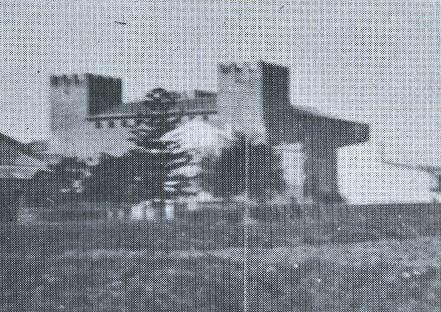
From 1500 until 1543, the Lordship was held by Jaume García de Aguilar y Almarich. This historical character was one the wealthiest noblemen of the Kingdom; in 1500, he married Isabel Joan de Torres, from whom he received a large dowry and in 1506, he inherited all the properties of his father-in-law, Berenguer Martí de Torres. These major monetary earnings could be the origin of the construction project of the castell.
The archaeological data seems to confirm this series of facts, since we now know that the castell was built under the Lordship of Jaume García de Aguilar y Almarich in the beginning of the 16th century. It was built facing the East, where the sun rises.
The castell was initially built by Jaume García Aguilar however the most important part of the construction and its probable termination was carried out by Gaspar García de Aguilar, his son.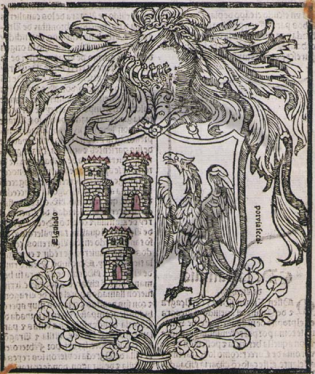
Jaume García de Aguilar y Amalrich was succeeded by his second son, Gaspar, his universal heir. Melchor was the next of kin in the lineage established by his father and the first-born son, Berenguer Martí de Torres de Aguilar, in the third rank. Gaspar died on 25th of January 1584 without any heirs, in the same way as Melchor and Berenguer.
Joan Pardo de la Casta, Mayor of the Kingdom of Valencia and due to his Austrian Hapsburg ideas, was exiled in Barcelona after the battle of Almansa and he died in that city, defending the pact-based government which characterised the Crown of Aragon.
He was the last Lord of Alaquas in the 17th century. The Lordship was passed years later to the heirs of Félix Pardo de la Casta (around 1773).
Joan Pardo de la Casta organised one of the last great Academies of Letters: the “Academia a las Señoras” (“Ladies Academy”), in 1698.
The expulsion of the “Morisco” community (converted Muslim Christians) in 1609 had major economic consequences in the entire Kingdom and also in Alaquas. Starting from that time, the Pardo de la Casta family witnessed the decline of their socio-economic situation and they found an escape by placing themselves in the Monarchy’s service by means of a military career. It was not until the arrival of Baltasar Pardo de la Casta, third in line of the Marquisate, when the family was able to rebuild and recover their prestige. The Duchy of Milan was the destination of Félix Pardo de la Casta, heir of the properties of Alaquas, he soon integrated in the city of Cremona and a short time later, he celebrated marriage with Margherita de Lodi, daughter of one of the richest families in the region. Lord Félix was governor of Cremona during thirteen years and thanks to his marriage and his position, he occupied a relevant place in the city; he became a major patron of the arts which consolidated the Italian branch of the Pardo de la Casta-Manfredi family.
Unlike the families which had preceded him, Félix Pardo de la Casta lived in Cremona until the end of his days and never returned to Spain. He died in 1688 and his daughter, Margarita Pardo de la Casta married the Marquis Gian Battista Manfredi; to whom she transferred the rights of her inheritance on the Lordship of Alaquas which in this way, was joined to this Italian family who managed it by means of Administrators with full powers until the disappearance of these seigniorial jurisdictions in the 19th century.
In 1918, there was an attempted sale to take advantage of the castle’s materials, primarily its wood as commercial goods; this caused an immediate social response and the town’s intellectual groups combined all their efforts to put an end to this aberration. Thanks to the official processes by Mariano Benlliure, through the “Real Academia de Bellas Artes de San Fernando” (Royal Academy of Fine Arts) in Madrid, on 21th of April 1918, he managed to convince King Alfonso XIII to sign a Royal Order whereby Castell d’Alaquàs was declared as a National Historical and Artistic Monument to protect it.
In 1922, the “Centro de Cultura Valenciana” (Valencian Culture Centre) published the book: “El Palacio Señorial de Alacuás” (The Feudal Palace of Alaquas) by José María Manuel Cortina Pérez and Vicente Ferrán Salvador which compiled the first multidisciplinary study which symbolises the achievement of the declaration as a Historical and Artistic Monument. Despite this status in 1928, a partial demolition of the Northwest Tower was clandestinely as carried out by the owner of the castell.
During the early years of the 20th century, this fortress was owned by different persons, until the first democratically elected Town Council in April 1979, presided by Albert Taberner, who promoted and began a long process whose objective was the castle’s recovery as a public space.
The Town Council of Alaquas began the official processes required to define the public use of the castell in 1999. These official processes were accompanied by an intense social debate with the most important social and political representatives of the district to ensure that one of the most important monuments in the “Comunitat Valenciana” (Valencian Autonomous Community) and an exceptional example of Valencian Civil Renaissance Architecture in Spain was completely available to its citizens, who became its true owner. Likewise in that same year on the 1st of December, it was catalogued as an Asset of Cultural Interest (BIC).
In the Municipal Government’s Plenary Session on the 13th of June 2002, the expropriation of the castell was officially approved and there was formal request to the Valencian Regional Government to urgently assume its occupancy. The Council of the Regional Government of Valencia granted their conformity on the 19th of November of the same year.
On the 3rd of January 2003, with the support and approval from all the Public Administrations, the Town Council achieved the occupancy of the monument; a moment which represents a historical event of great significance, since after centuries of private ownership, the castle was now in the hands of its citizens.
Subsequently on the 28th of February 2003, the castell opened its doors to the public for the first time, thus inaugurating a new stage where it would become one of the main Cultural Centres in the Valencian Autonomous Community. In a short period, the main salons were occupied with contemporary painting, sculpture and photography exhibitions, as well as in its cloister, where an extensive program of theatre and musical performances were celebrated.
The Municipal Government immediately began plans to write up the Monument Management Plan and the Refurbishment and Restoration Project. For this purpose, a multi-disciplinary team of experts and qualified technicians was created who carried out the tasks of the archaeological and historical study, the evaluations of the coffered wood ceilings and the ceramic elements.
The Town Council of Alaquas approved the Refurbishment Project on the 25th of August 2005, and began the works for their execution and concluded the project on the 19th of March 2007.
Throughout the history of the castell, the primitive and outdated functions of each of its spaces have been subject to modifications. Next, in each of its floors, we shall observe these changes. In its day, this building was a Feudal Palace where the upper class of Alaquas resided; it was also a rug factory and a space where wedding banquets were celebrated.
- Click here for audio guide with sign language.
- Audio guide: